They called him “the Master,” “the Genius.” He is the man whose single portrait the Dutch state and its partners bought for €175 million — just to keep it in public hands.1 His name is Rembrandt Harmenszoon van Rijn (1606–1669) — or simply Rembrandt. Yet perhaps his most important masterpieces never hung on a wall. They were made of flesh and blood, had names like Dou, Flinck and Fabritius. They were his pupils — and grew into masters of their own.
If you develop people, you know these questions. How do we let people learn on work that matters? How do we give feedback that actually helps? How do we turn our strongest people into teachers — and how do we know our development has worked? Rembrandt found answers nearly four hundred years ago. Here are five of them.
A School in One Studio
Rembrandt took his first pupil, Gerrit Dou, in 1628 — at the age of 22.² Today, some 50 artists are connected to his workshop, 20 of them documented by name.³
His reputation as a teacher was such that, in art historian Margaret Kahr's view, his studio worked like a graduate school for painters who had already completed their training elsewhere.⁴ The Rembrandt House Museum calls him one of the few seventeenth-century artists who literally created a "school."⁵
What makes this school remarkable is where its graduates ended up. Werner Sumowski, who catalogued the paintings and drawings of Rembrandt's pupils in a multi-volume standard work, observed that most of them followed their teacher's example only for a while. Over the course of their careers, they arrived at forms that betray nothing of their training.⁶
Look at the careers:
Gerrit Dou (1613–1675) turned to small, polished scenes of astonishing detail and became one of the most sought-after painters in Leiden.
Govert Flinck (1615–1660) adopted a brighter, more elegant manner, won commissions for Amsterdam's new town hall — and gradually took the fashionable portrait market from his former teacher.²
Carel Fabritius (1622–1654) set luminous subjects against pale walls and painted The Goldfinch, before he died at 32 in the Delft gunpowder explosion of 1654.
Samuel van Hoogstraten (1627–1678) became a master of illusion — and the author of an influential book on painting.
Nicolaes Maes (1634–1693) painted quiet domestic scenes, then became a sought-after portraitist.
Arent de Gelder (1645–1727) kept his teacher's late style alive well into the eighteenth century.
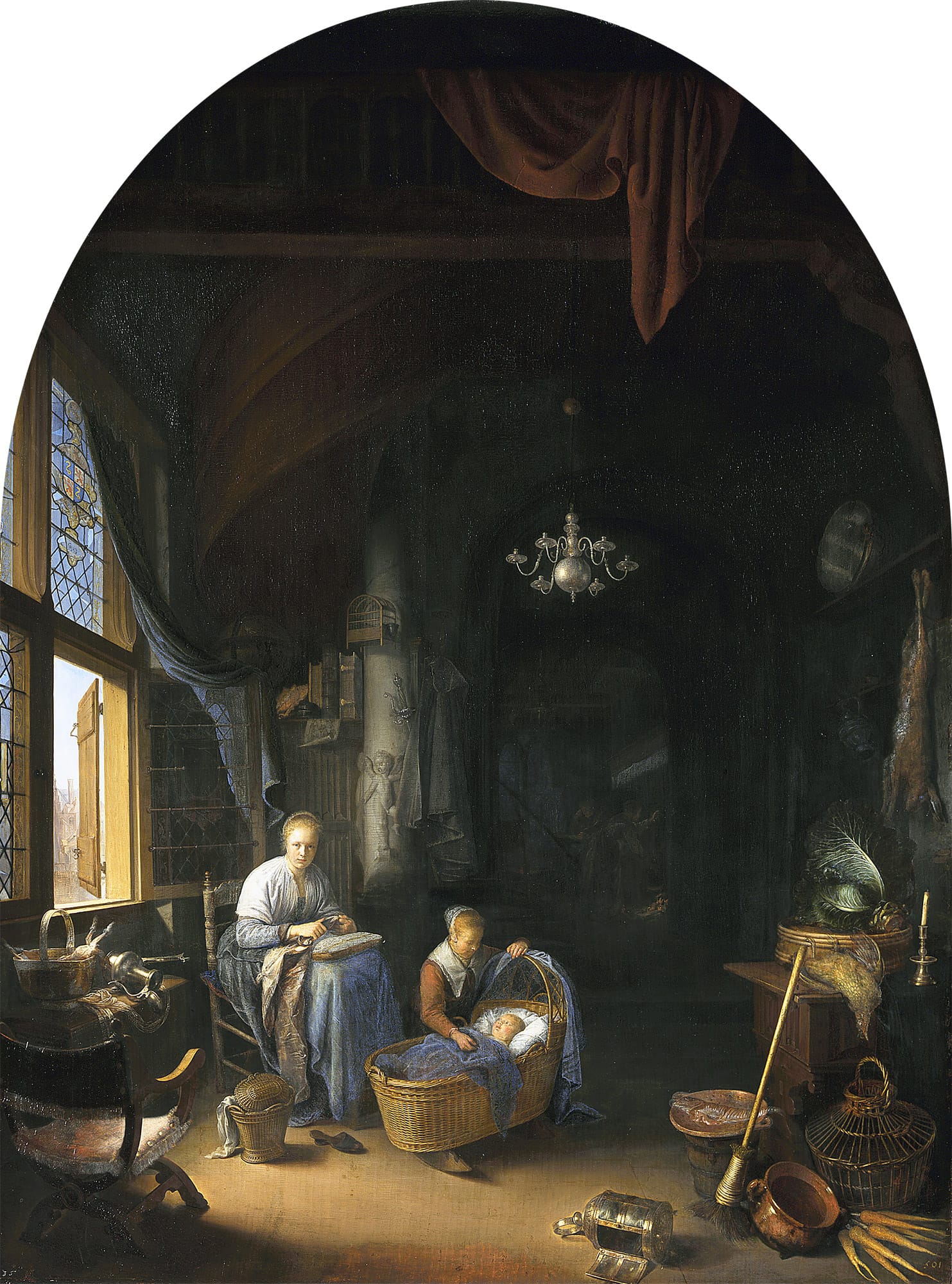
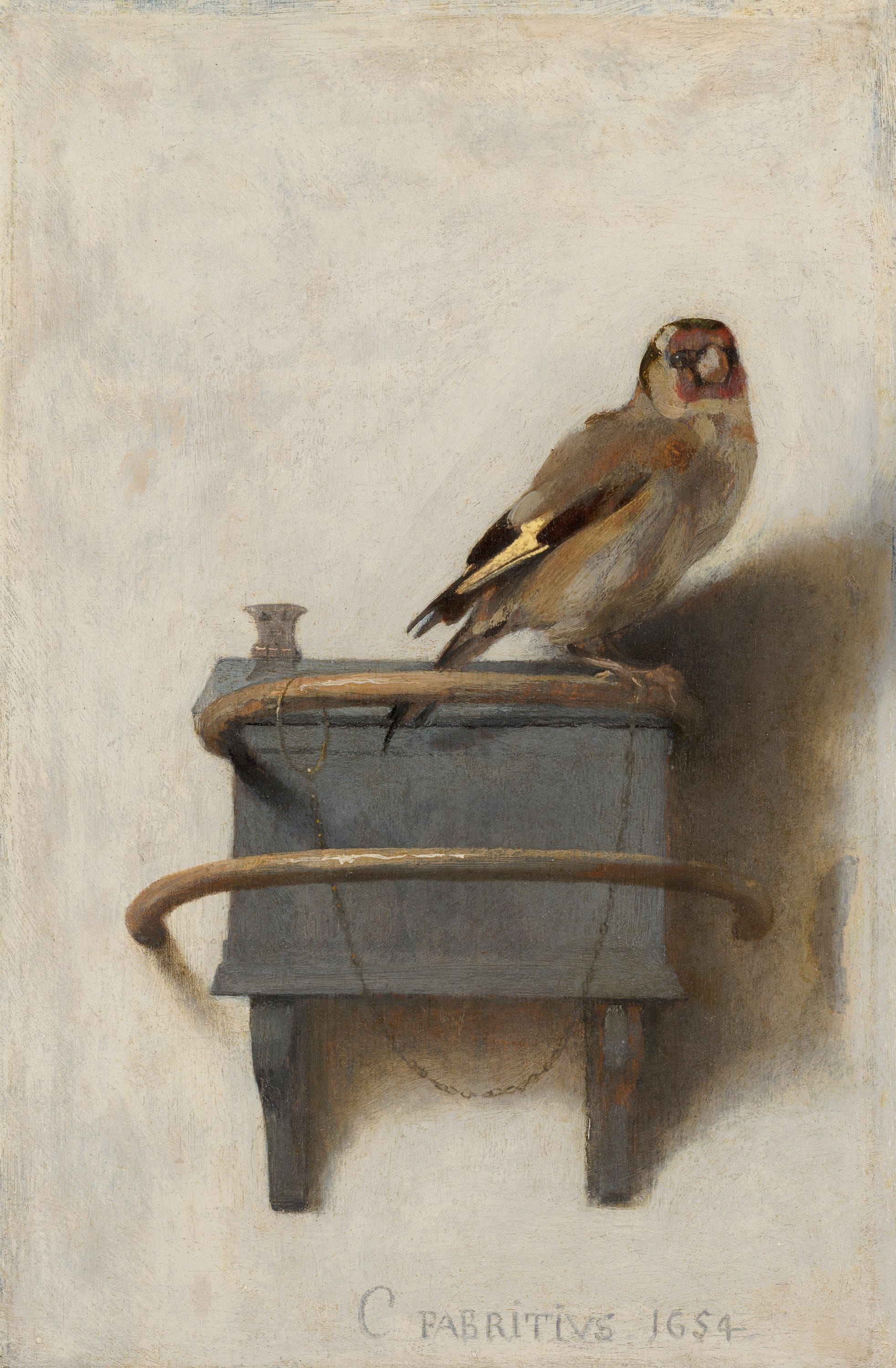
Same teacher, two hands. Dou polishes every surface until the brushstrokes disappear. Fabritius lets them show and floods the picture with light.
Six painters, six paths. So how did he do it? Five practices stand out.
1. Make the Real Work the Classroom
Training in a seventeenth-century workshop moved in stages: first copying paintings and prints, then drawing and painting objects, and finally working from life.³ In Rembrandt's studio, pupils also worked on pictures that went to market. Imitating the master was part of the training, and combining teaching with commercial production was common practice at the time, as Ernst van de Wetering of the Rembrandt Research Project points out.⁷
The Sacrifice of Isaac in Munich shows how that worked. According to the Bavarian State Painting Collections, the composition came from Rembrandt, a master pupil painted it, and Rembrandt then corrected it. An inscription on the canvas reads "Rembrandt altered and overpainted, 1636."⁸

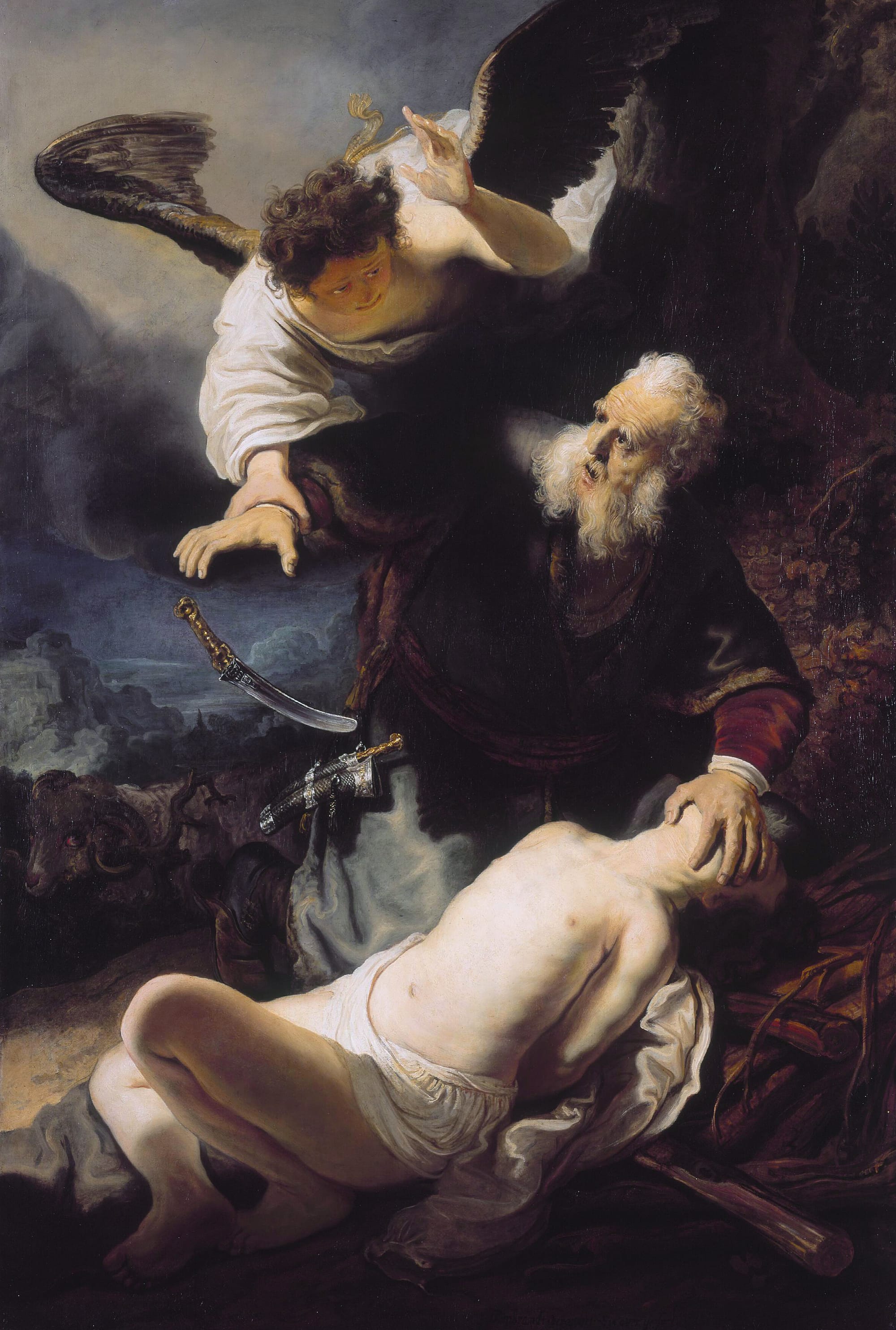
Spot the difference. In the Munich version, the angel swoops in from behind Abraham.⁹ The pupil learned on a real, saleable painting — and the master stepped in where it counted.
Learning happened on work that mattered, with a buyer at the end.
Researchers today describe the same principle. Keith Sawyer studied professors at eight art and design schools and found that they build their students' mastery through carefully sequenced project assignments.¹⁰ The studio remains one of the classrooms we understand best.
For us: Give people real work with real stakes early, and sequence it so each assignment stretches them one step further.
2. Correct the Work — and Show How
A drawing in Dresden, made by a pupil in Rembrandt's studio around 1646, carries handwritten notes on its back. They read like a studio critique: Joseph lifts too heavily and too inconsiderately. Mary ought to ease the child a little. Both figures have heads that are too large.¹¹ A second, corrected Joseph has been drawn right into the scene.
Every comment is about the drawing. And a sketch by Rembrandt in Berlin appears to answer the notes, showing the same scene with the changes they ask for.¹¹ His pupil Samuel van Hoogstraten later made this a rule: masters should improve their pupils' drawings by sketching the same subject themselves.¹²
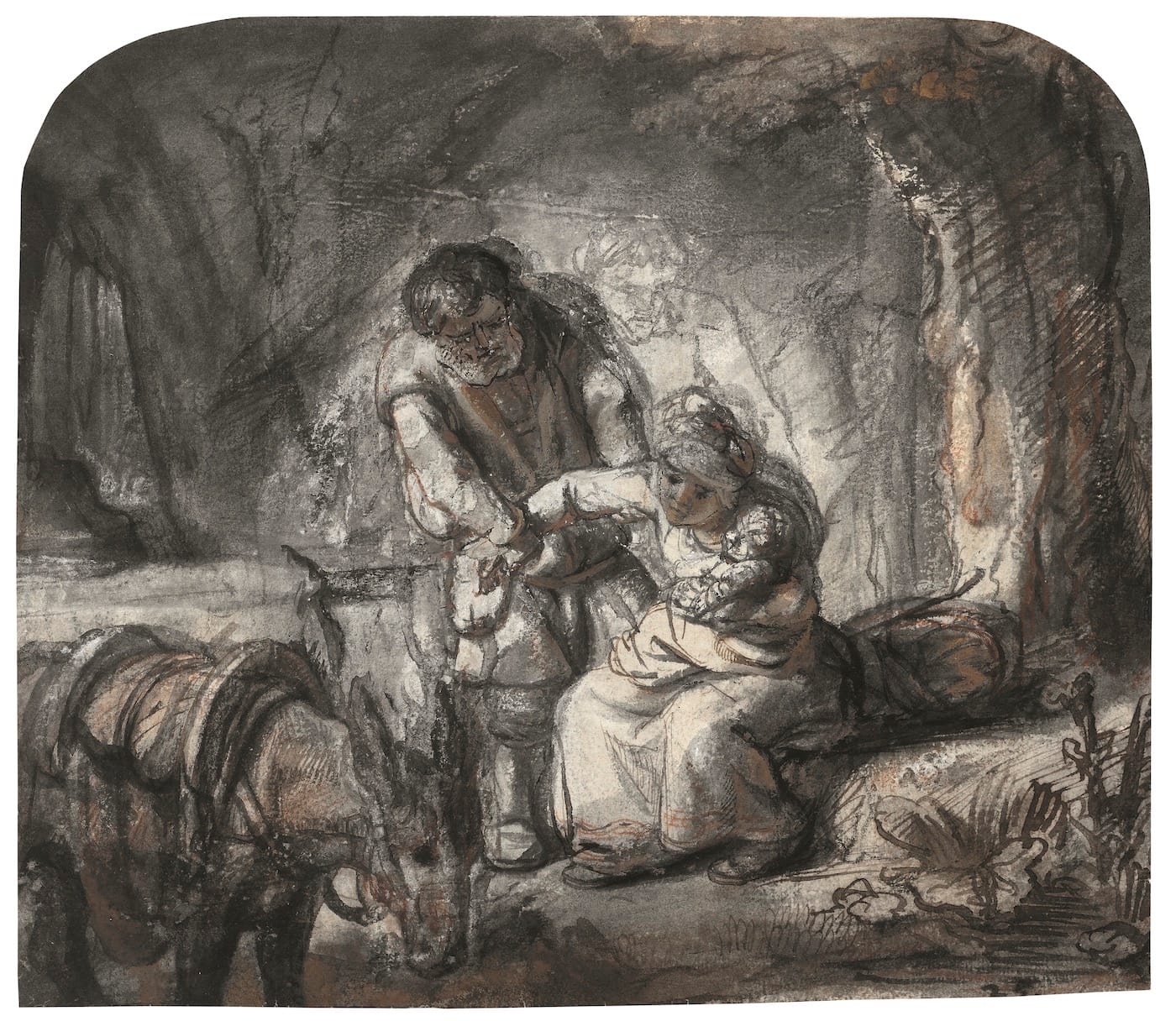
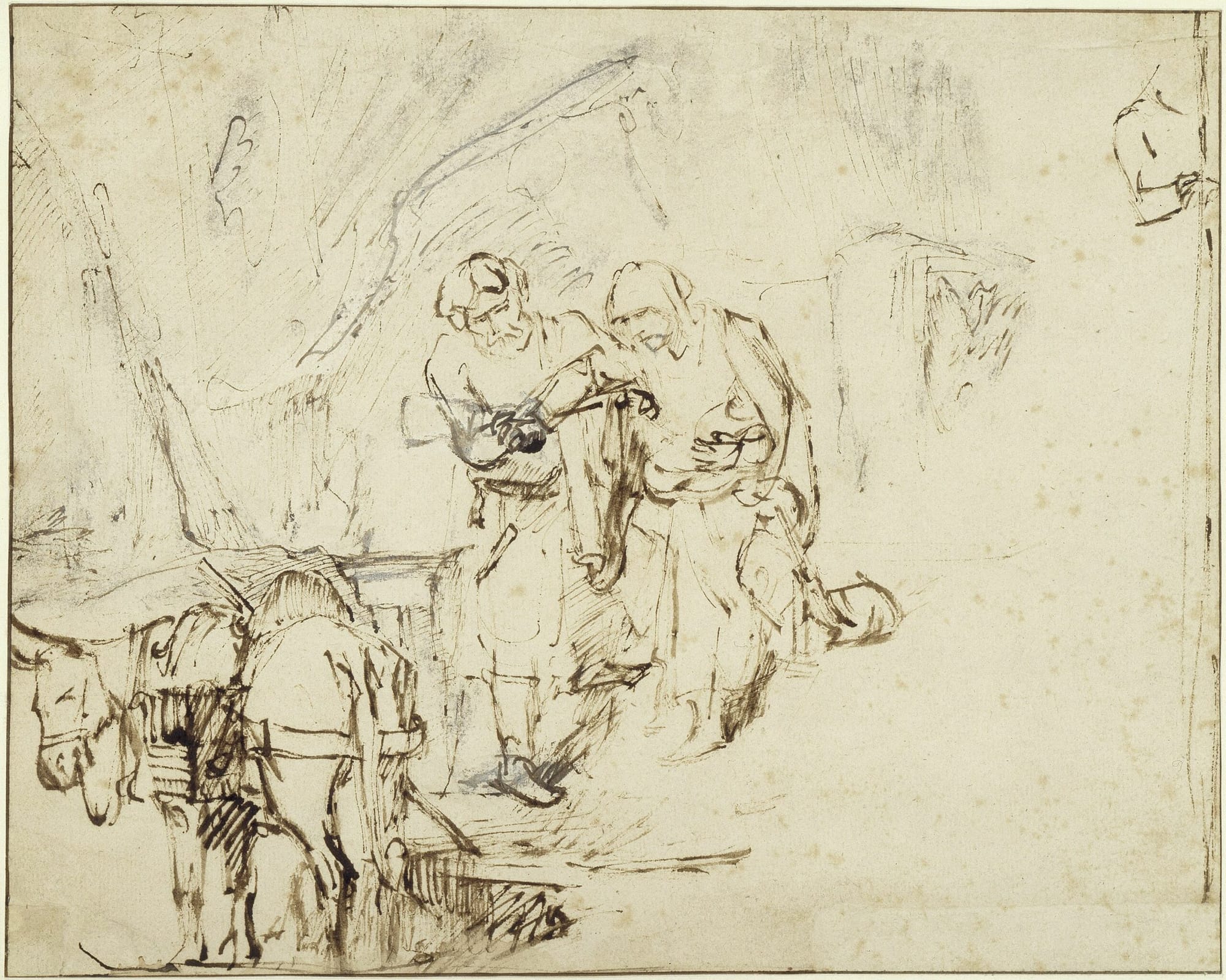
Feedback, 1640s style. Written notes on the work, a corrected figure drawn right into it — and a sketch that shows how it could look.
Research on feedback points the same way. Feedback aimed at the task tends to help; feedback aimed at the person tends to backfire.
For us: When we give feedback, we can pick up the pen. Show one possible version, then hand the work back.
3. Turn Your Best Learner Into a Teacher
New research from the Rembrandt House Museum shows that Van Hoogstraten, while still a pupil, corrected the drawings of the younger Barent Fabritius (1624–1673), Carel's brother. Peer correction was apparently unusual in the studio, which suggests Van Hoogstraten served as a pupil with teaching responsibilities — first among equals.¹¹
The influence is plain to see. Barent Fabritius adopted Van Hoogstraten's habits so thoroughly that one of his drawings is still catalogued under Van Hoogstraten's name.¹¹
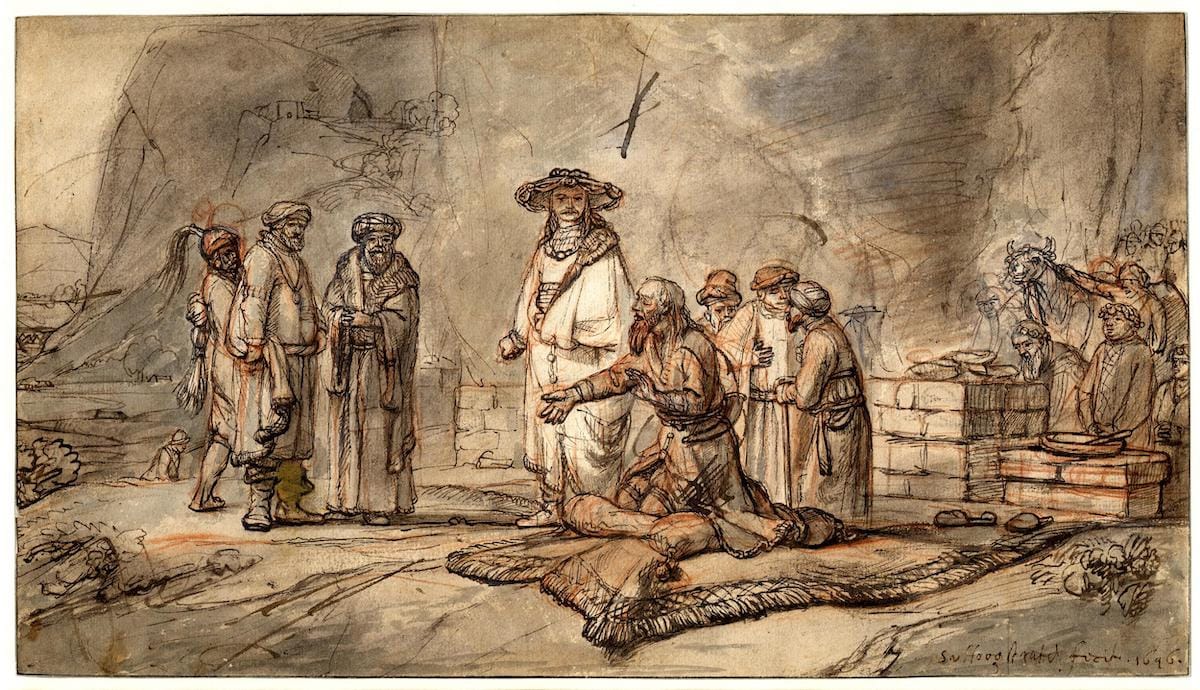
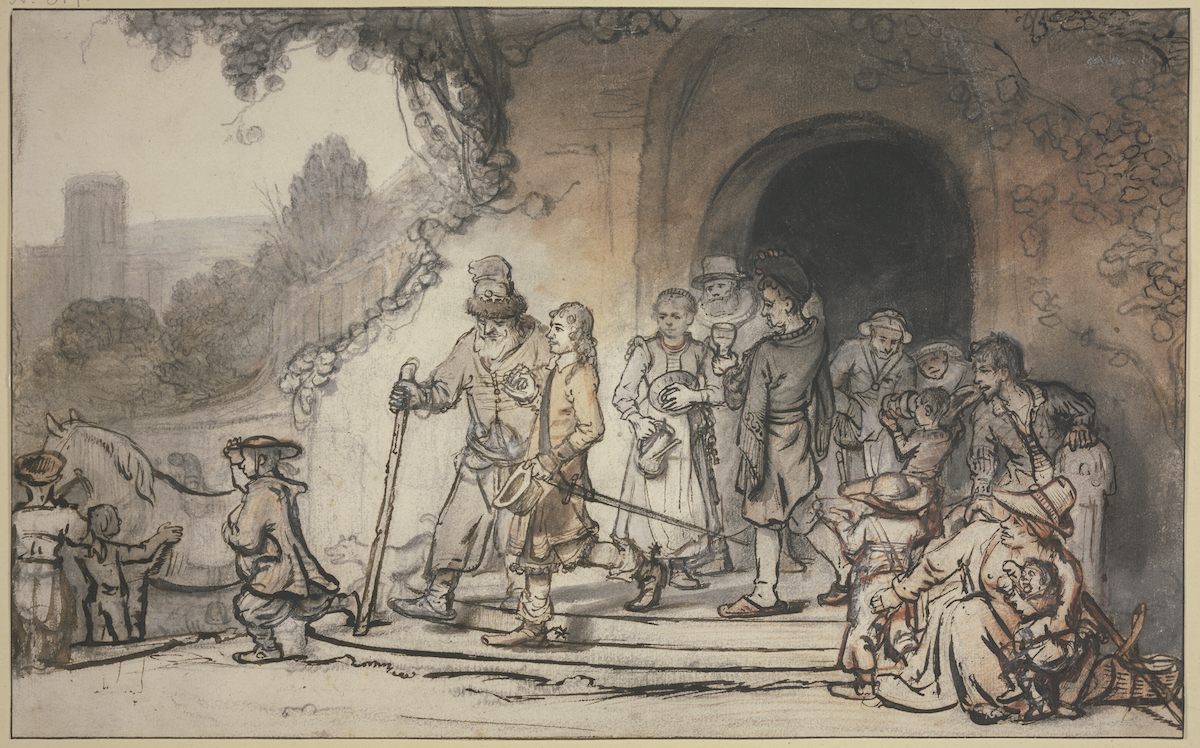
Taught by a peer. Same red chalk, same doll-like figures, same play of light and shadow. The first among equals left his fingerprints.
The model traveled. Van Hoogstraten later ran his own studio the same way.¹¹ One of his pupils there was the painter and biographer Arnold Houbraken (1660–1719), whose lives of Dutch painters are among our key sources on Rembrandt's studio. Three generations, one teaching chain.
For us: Ask the strongest people on the team to teach. They learn more deeply by explaining, and our way of developing people spreads further than we could carry it alone.
4. Practice What You Know
Van Hoogstraten was a curious student and asked his teacher a great many questions. Rembrandt's reply has come down to us through him:
"Try to put well in practice what you already know; and in so doing, you will in good time discover the hidden things which you now inquire about."¹³
It is one of the very few statements on teaching we have from Rembrandt himself — and it is a coaching principle. The answer lies in the doing.
For us: When someone asks for the answer, we can ask back: What would you try first? Then let them try.
5. Measure Success by How Different They Become
According to Houbraken, Rembrandt rented a warehouse on the Bloemgracht where each student had a space of his own, divided off with paper or sailcloth, so they could work without bothering one another.¹⁴ Room to practice, and room to develop a hand of one's own.
The Goldfinch shows what came of it. Fabritius used a technique he learned from Rembrandt — scratching into the wet paint with the end of the brush to reveal the dark layer beneath.¹⁵ He applied it to a small bird on a bright wall, in a picture that looks like no Rembrandt at all. The skill traveled; the style was his own.
When Flinck began winning the portrait commissions his teacher once received, that was a success for the studio too.
For us: A person who finds a style of their own — or overtakes us in some field — is the clearest sign that our development worked.
One Thing We Can Do Better Today
Rembrandt's teaching was also good business. According to his contemporary, the painter Joachim von Sandrart (1606–1688), each pupil paid 100 guilders a year, and Rembrandt earned more than 2,000 guilders annually from teaching.² Pupils' work in his manner was sold, and Rembrandt signed some of it himself.¹⁶
Today we can go one step further: put the developer's name on the work. Recognition is part of development.
The Students Kept Coming
In 1656, Rembrandt went bankrupt — after years of lavish collecting and a grand house on the Breestraat he never managed to pay off.¹⁷ The house and his collection went to auction. Amsterdam's wealthiest families were by then ordering their portraits from painters with a lighter, more fashionable touch, among them his own former pupil Govert Flinck.²

And yet the students kept coming. Between 1650 and his death in 1669, at least fourteen young artists trained with him, among them Nicolaes Maes, Willem Drost (1633–1659), Abraham van Dijck (1635–1680) and Arent de Gelder.⁵
His money was gone and his fashion had passed. What remained was what he could teach — and that was enough to fill his studio to the end.
Rembrandt's paintings hang in the great museums of the world. His other masterpieces kept knocking at his door.
Talent Takeaway
Some of Rembrandt's most lasting work carries other people's names. For our own teams, the method still holds: real work early, feedback we show as well as tell, our strongest people teaching, questions answered with practice — and joy when someone develops a style all their own.
¹ NL Times. (2022, January 19). Senate approves €175 million Rembrandt purchase. https://nltimes.nl/node/56552
² The Leiden Collection. (2023). Rembrandt van Rijn: Biography. https://www.theleidencollection.com/artists/rembrandt-van-rijn/
³ Kunsthistorisches Museum Wien. (2024). The pupil and his teacher. Rembrandt – Hoogstraten: Colour and Illusion. https://rembrandt.khm.at/en/the-pupil-and-his-teacher/
⁴ Kahr, M. D. (2018). The Rembrandt school. In Dutch painting in the seventeenth century. Routledge. https://doi.org/10.4324/9780429500893-7
⁵ De Witt, D., van Sloten, L., & van der Veen, J. (2015). Rembrandt's late pupils: Studying under a genius. Museum Het Rembrandthuis; Terra.
⁶ Sumowski, W. (1989), vol. 1, p. 82, as quoted in Hadjinicolaou, Y. (2019). Thinking bodies – shaping hands. Brill. https://doi.org/10.1163/9789004407725_010
⁷ van de Wetering, E. (2014). What is a non-Rembrandt? In A corpus of Rembrandt paintings VI. Springer. https://doi.org/10.1007/978-94-017-9240-0_2
⁸ Bayerische Staatsgemäldesammlungen. (2025). Rembrandt (and workshop), Die Opferung Isaaks, 1636. Alte Pinakothek, Munich. https://www.sammlung.pinakothek.de/en/artwork/9pL3ERl4eb/rembrandt-harmensz-van-rijn/die-opferung-isaaks
⁹ Samuel H. Kress Foundation. (n.d.). Kress Collection: The Sacrifice of Isaac (K1633), catalogue entry. https://www.kressfoundation.org/kress-collection/artwork/28ad5d6f9557eaad89fa98e0bb92ab2dfbac6d65ce71cefc24ecdd780db48f8
¹⁰ Sawyer, R. K. (2018). Teaching and learning how to create in schools of art and design. Journal of the Learning Sciences. https://doi.org/10.1080/10508406.2017.1381963
¹¹ van Eijsden, J. (2024). Samuel van Hoogstraten as Rembrandt's teaching assistant. Kroniek van het Rembrandthuis 2024/25, 7–21. https://doi.org/10.48296/KvhR2024.02 Drawings reproduced from this article.
¹² van Hoogstraten, S. (1678). Inleyding tot de hooge schoole der schilderkonst. Rotterdam, p. 192.
¹³ van Hoogstraten, S. (1678). Inleyding tot de hooge schoole der schilderkonst. Rotterdam. Rembrandt's advice as recalled by his former pupil; English translation by Anne Porcelijn.
¹⁴ Houbraken, A. (1718–1721). De groote schouburgh der Nederlantsche konstschilders en schilderessen (Vol. 1, pp. 250–259). English translation: RKD Studies. https://houbraken-translated.rkdstudies.nl/1-240-289/page-250-259/
¹⁵ Mauritshuis. (n.d.). Carel Fabritius, The Goldfinch. https://www.mauritshuis.nl/en/our-collection/artworks/605-the-goldfinch
¹⁶ Bomford, D., Brown, C., & Roy, A. (1988). The painter's studio. In Art in the making: Rembrandt. National Gallery Publications.
¹⁷ Crenshaw, P. (2006). Rembrandt's bankruptcy: The artist, his patrons, and the art market in seventeenth-century Netherlands. Cambridge University Press. · Museum Het Rembrandthuis. (n.d.). History of the house. https://archief.rembrandthuis.nl/en/?p=8349
Further reading: Bevers, H., Hendrix, L., Robinson, W. W., & Schatborn, P. (2009). Drawings by Rembrandt and his pupils: Telling the difference. J. Paul Getty Museum. · van de Wetering, E. (1997). Rembrandt: The painter at work. Amsterdam University Press.
Paintings: Wikimedia Commons, public domain reproductions.