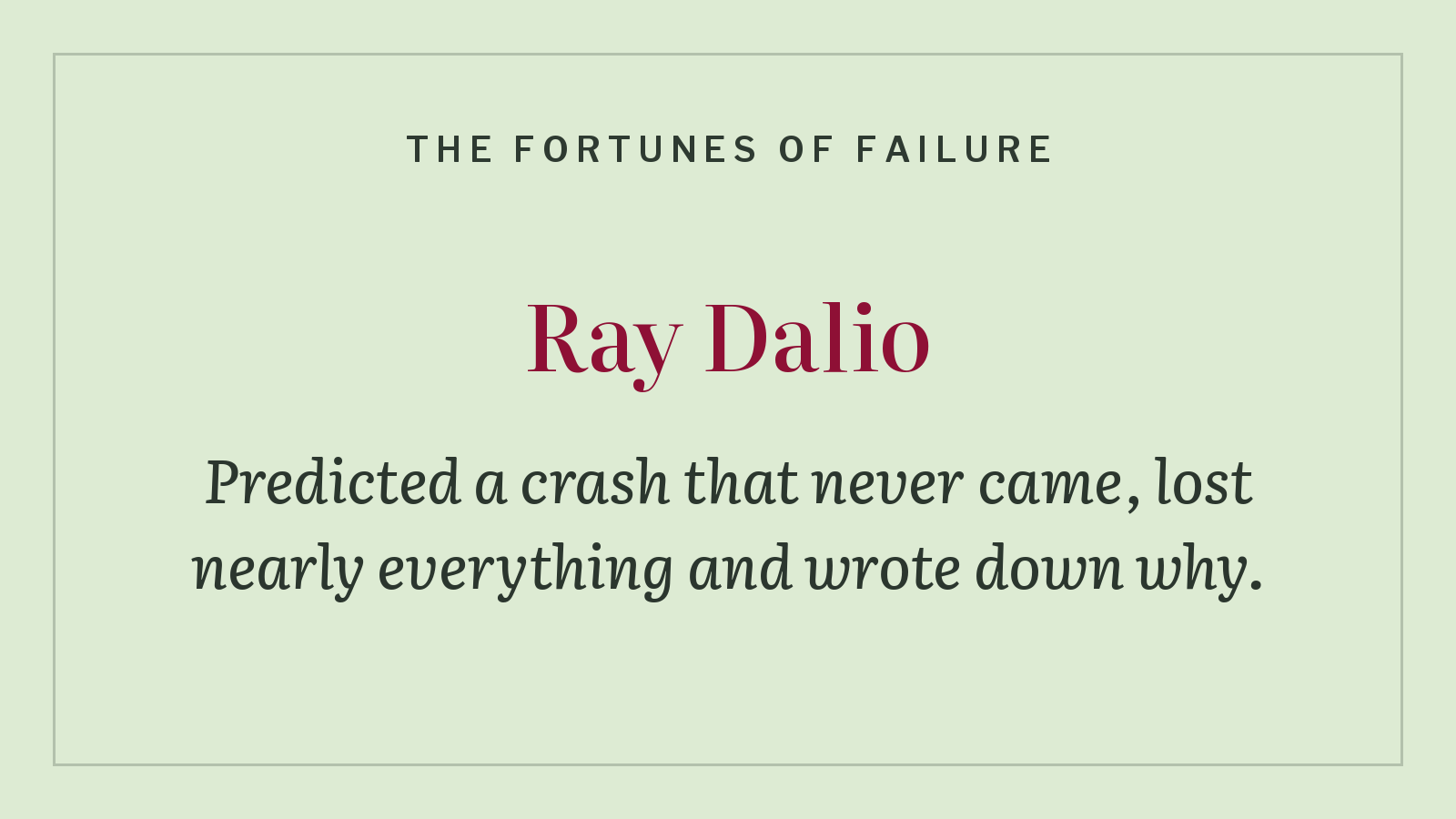
In 1982, Ray Dalio was certain. Mexico had defaulted on its debt, American banks were exposed, and the young founder of Bridgewater told anyone who would listen, including members of Congress, that a depression was coming.
It never came. The stock market started a long rally, and Dalio's bets went the wrong way.
The fall
In his book Principles, Dalio describes what followed. He had to let go of everyone at Bridgewater until he was the only one left. He borrowed $4,000 from his father to cover his family's bills, and he wondered whether to give up and take a regular job.¹
The turn
As Dalio tells it, the crash changed the question he asked himself. He moved from wanting to be right to asking how he could know he was right. He sought out smart people who disagreed with him. He wrote down the reasoning behind his decisions, so he could check it against what actually happened and learn from every miss.
Bridgewater grew into a giant of the hedge fund world, built on a culture where mistakes are put on the table and discussed openly. That culture has critics, and even admirers call it intense. The core habit travels well beyond finance.
The give-back
In 2017, Dalio published his rules as a book, sharing the learning system he built from that painful year with anyone who wants it. In 2011, he and his wife, Barbara, had signed the Giving Pledge, committing the majority of their wealth to philanthropy.²
Talent Takeaway
- For every important decision, write down what you decided, why, and what result would change your mind.
- Put a date in the calendar to look at it again.
- Before you decide, ask the smartest person you know who disagrees with you.
- Judge a decision by its reasoning as well as its outcome, in your own work and in your team's.
¹ Dalio, R. (2017). Principles: Life and work. Simon & Schuster.
² The Giving Pledge. https://givingpledge.org