Picture this. You're walking through the bush in Kenya, and a few steps ahead, something big moves in the grass.
What do you do? Freeze? Back away slowly? Step toward it? Run?
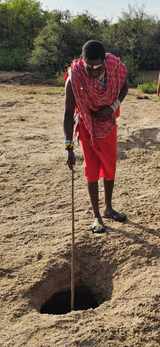
On my last visit, a Maasai guide named Amos took us on a tour among wildlife, and he explained a great deal along the way. I haven't stopped thinking about it since.
Because people in his community learn how to handle dangerous situations from childhood. When do you stand still? When do you move toward a threat? When is running the right call? When do you freeze and wait for it to pass? Amos had an answer for each case, and he described them like skills people grow up with.
How does a child learn that? Who teaches it? At what age does it start? And what do the elders say when someone gets it wrong?
“
The elephant can be tripped by a creeping plant.
Maasai proverb
Now think about your own week. A client calls, upset. A key person hands in notice. A project slips at 4 p.m. on a Friday. What's your first move? Wait? Step in? Step back? Pick up the phone? Say nothing for a minute?
Some people seem to be very good at that. How? Were they born with it, or did someone teach them? Can calm under pressure be learned like any other skill? And if it can, why do most companies leave it to chance?
For most of us, a buffalo in the bush is rarely the daily challenge. And yet, I felt we can learn a lot from Amos. I am truly looking forward to our conversation.
The trip is part of the Leadership Alliance, our project with partners in Kenya.
Leave your email below, and we'll tell you the moment the interview is out.
Talent Takeaway
- Calm under pressure is a skill, and skills can be taught early.
- Ask the people who grew up with it. They often explain it better than any textbook.
- Patience is a skill, too. And yet we can't wait to add to this list after interviewing Amos.