It is 1909, and the circle of artists who would soon found “Der Blaue Reiter” spends its evenings arguing about art, at least as Gabriele Münter later remembered it. Wassily Kandinsky does much of the talking. Across the table sits his friend Alexej von Jawlensky, trying to keep up.
Münter, Kandinsky’s companion and a formidable painter in her own right, turns these evenings into a portrait. She leaves the speaker out of the picture and paints the listener. And she gives the picture a one-word title: Zuhören. Listening.
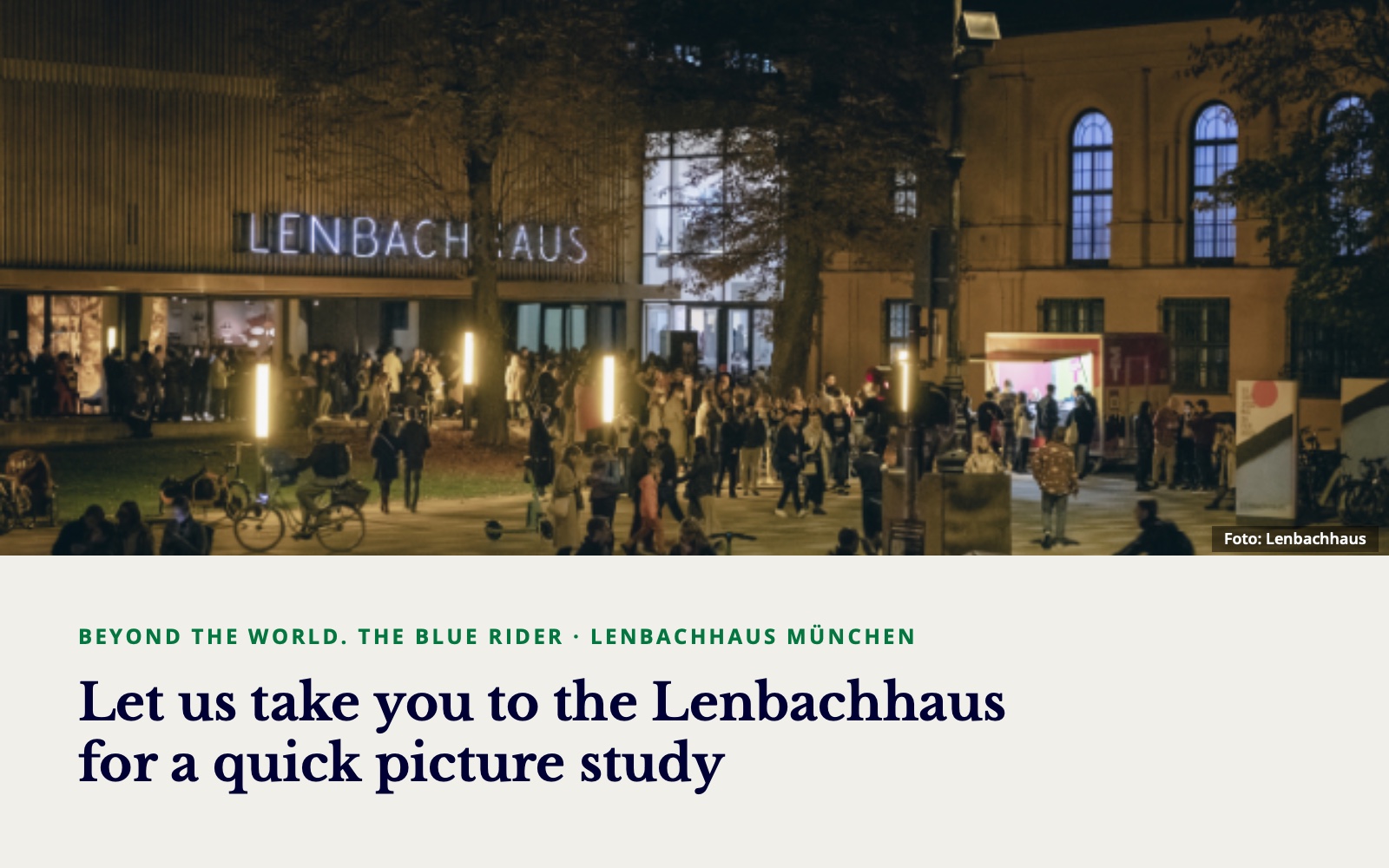
You can see the painting right now at the Lenbachhaus in Munich, or from your desk in the museum’s online collection.
When I first saw this painting, it fascinated me so much that I gave it a place in my book. Münter captured exactly what the book is about: listening as turning toward someone, giving them their full attention and presence.
A question mark in human form
The picture is strikingly simple. A single black line suggests a table. Behind it, pushed into the right half of the frame, sits Jawlensky: a broad body, a curve of pink shirt front, a round, ruddy face with two blue dots for eyes and eyebrows raised high.
His head tilts slightly. As the Lenbachhaus describes it, the whole figure becomes one large question mark. Even the objects lean with him: two sausages on a plate and the base of a kerosene lamp echo the angle of his listening.
Münter later explained the scene. The friends argued about art without pause, she recalled, and Kandinsky’s theories often left Jawlensky baffled. She painted him with a “verdutzt,” or perplexed, look on his face as he took in Kandinsky’s newest ideas.
The bold, angular blocks of color in the center of the canvas pull our eye away from him. Jawlensky ends up at the margin of his own portrait. It is gently funny. It is also uncomfortably familiar. Most of us have seen this face in a meeting. Some of us have worn it.
What leaders can see in it
I keep coming back to three things in this portrait. Each runs through my new book, Why Am I Talking?
Attention can hide confusion. Jawlensky sits with his head tilted and his eyebrows raised high. He looks attentive, even eager, and by Münter’s account he was perplexed. Someone can give us their full attention and still lose the thread. Listening means turning toward a person and checking, now and then, whether we are still following each other.
The speaker is missing. Kandinsky is nowhere in the frame. We see only the effect of his words: a kind, willing face that has stopped following. Leaders rarely see themselves talking. They see faces, and a polite nod is easily mistaken for agreement. A 2013 study by Leigh Plunkett Tost and colleagues points the same way: when people in formal leadership roles feel especially powerful, they tend to dominate team discussions, their teams contribute less, and performance suffers. Think back to the last time you explained something important to your team. How many faces were still with you at the end?
The painter saw what the speaker missed. Münter caught on canvas a moment that easily slips by in conversation: a willing listener whom the conversation has left behind. A simple workshop exercise shows this well: participants work in threes. One person speaks, one listens, one simply observes. The observer often notices what the other two miss: a change in the voice, a spark in the eyes, the moment someone drifts off. Münter played that third role, with a paintbrush.
The quietest person at the table
Münter gave the painting to the Lenbachhaus in 1957, along with much of her collection. If you happen to be in Munich, you can see it in the museum’s exhibition “Beyond the World. The Blue Rider,” which runs until September 5, 2027. Otherwise, the online collection makes for a good first visit.
Either way, the painting is worth a long look. It reminds us that listening sits at the heart of leadership. It is where understanding starts, and sometimes stops. Next time you are in full flow, glance across the table. Is anyone wearing Jawlensky’s face?
Before you next speak
Five small habits help leaders spot their own Jawlensky moments, and avoid creating them.
- Ask yourself: Why am I talking? For years a Post-it has hung on my desk with one word: WAIT, for “Why Am I Talking?” Sometimes talking is leadership. More often, listening is.
- Hold the silence. After asking a question, leave a few seconds before anyone speaks. Eight can work well. The pause feels long, yet the real answer often arrives in it.
- Read the faces, then ask. If your team looks the way Jawlensky does, stop explaining. Ask: “What are you making of this so far?”
- Change seats. Let a team member chair the next meeting, and tell everyone: “Today I’m just listening.”
- Close with an open door. End one-on-ones with: “What haven’t I asked you that you’d like to tell me?”
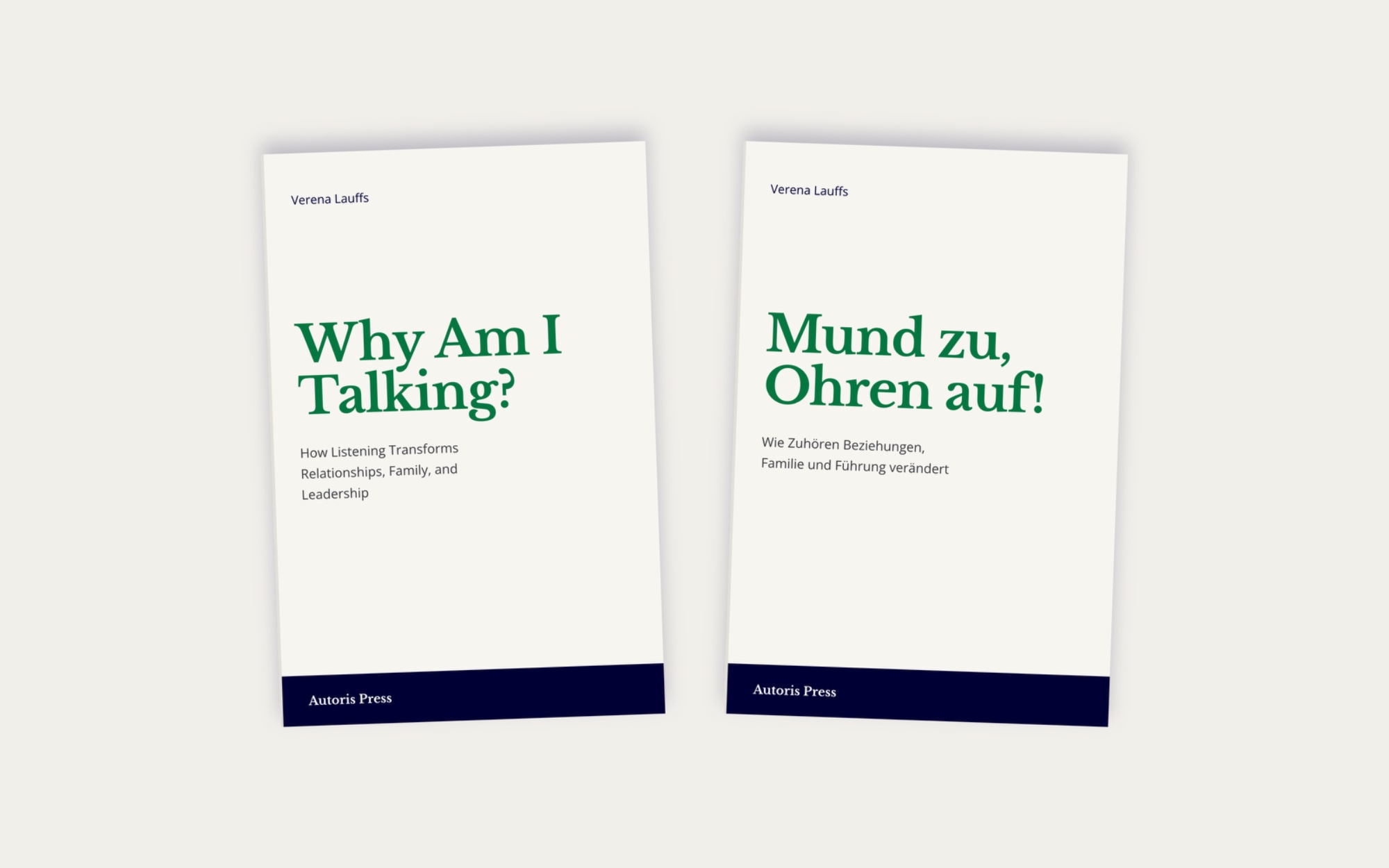
Why Am I Talking? How Listening Transforms Relationships, Family, and Leadership by Verena Lauffs is published by Autoris Press (2026). It combines current research with real-life stories, exercises, reflection questions, and practical tools for work and home. The German edition, Mund zu, Ohren auf!, is also available.
Get the book (English edition) | Get the book (German edition)
Sources
Lenbachhaus München: Gabriele Münter, Zuhören (Bildnis Jawlensky), 1909, including the catalog text from Helmut Friedel and Annegret Hoberg, Der Blaue Reiter im Lenbachhaus München, Prestel, 2007. https://www.lenbachhaus.de/en/digital/collection-online/detail/zuhoeren-bildnis-jawlensky-30018339
Lenbachhaus München: Beyond the World. The Blue Rider, March 10, 2026 – September 5, 2027. https://www.lenbachhaus.de/en/program/exhibitions/details/ueber-die-welt-hinaus-der-blaue-reiter
Tost, Leigh Plunkett; Gino, Francesca; Larrick, Richard P.: “When Power Makes Others Speechless: The Negative Impact of Leader Power on Team Performance.” Academy of Management Journal, Vol. 56, No. 5, 2013.