Year after year, the jury of the Paris Salon looked at Paul Cézanne's pictures and said no. His first solo exhibition opened when he was 56.
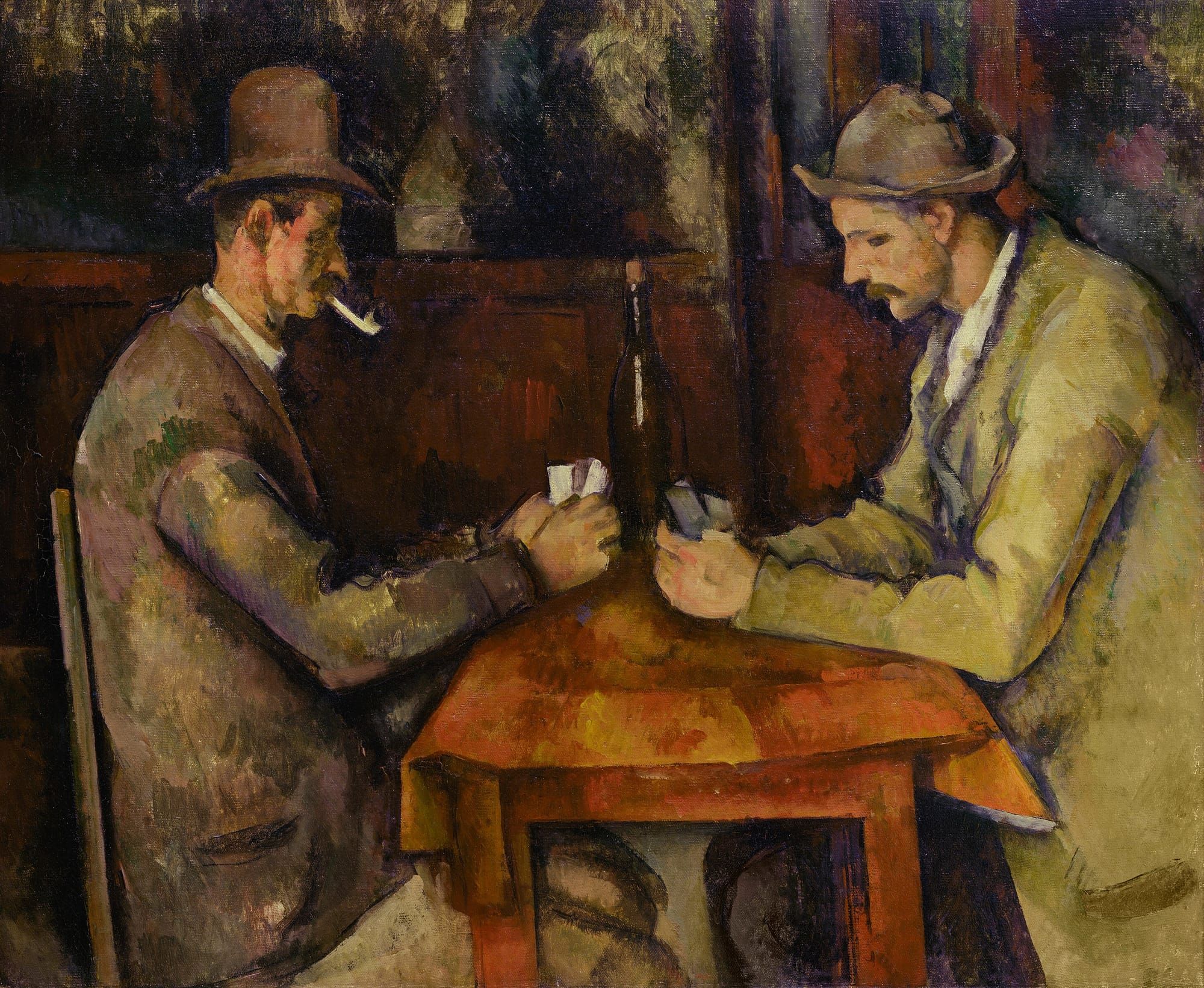
Picasso later called him "my one and only master."¹ In 2011, one version of his Card Players reportedly sold for around $250 million, at the time the highest price ever paid for a painting.²
Which raises an uncomfortable question for anyone who develops people: would we have spotted him?
His life reads like a leadership course in short chapters. Each one holds something we can use immediately.
The Bank Could Wait
Paul Cézanne (1839–1906) was supposed to follow his father, Louis-Auguste, a former hat merchant who had co-founded a bank in Aix-en-Provence.³ Paul enrolled in law school to please him and took drawing lessons on the side. In 1861 he left for Paris to become a painter. His father objected, then relented, and paid him a modest allowance for years.
In 1866 Cézanne painted his father reading a newspaper in a large armchair. Above the old man's head hangs a small still life by the son. The National Gallery of Art in Washington reads it as a quiet declaration of independence.⁴
What we can take from it
Parents, bosses, and markets all offer us a yardstick for success. Choosing our own takes courage, and it often takes support too. Even Cézanne needed his father's allowance.
Talent Needs a Second Look
The Salon rejected his submissions every year from 1864 to 1869, and again in the late 1870s. When he showed with the Impressionists in 1874 and 1877, critics singled out his pictures for ridicule.
In 1882 a picture finally got in, most likely the portrait of his father. It took a friend on the inside: the painter Antoine Guillemet sat on the jury, secured the admission and had Cézanne listed in the catalogue as his pupil.⁵ It remained the only time the Salon showed his work.
Each rejection told him what one jury thought of one picture in one year. It said very little about what he might become.
Recognition came late. In 1895 the young dealer Ambroise Vollard gave him his first solo exhibition in Paris. Collectors and younger painters began to pay attention.⁶
One of them was Henri Matisse. In 1899, short of money, he bought a small Cézanne anyway. Almost forty years later he wrote that the picture had carried him through the critical moments of his career, and that from it he had drawn "my faith and my perseverance."⁷
What we can take from it
Performance reviews, selection decisions, and assessments all produce data. A rejection is one data point. Talent sometimes needs a second look, and someone like Guillemet who opens a door.
Same Mountain. New Eyes.
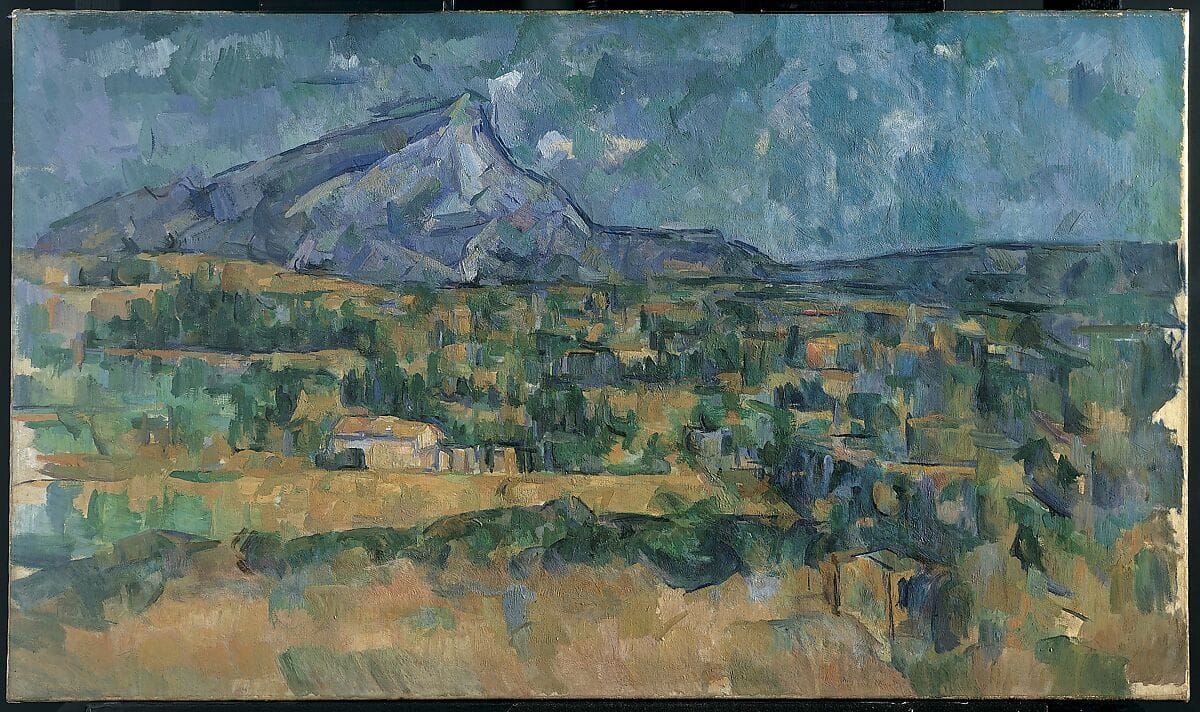
Outside Aix rises a limestone ridge, Mont Sainte-Victoire. Cézanne painted it again and again, in oil and in watercolor, from different hills, in different light. The Princeton University Art Museum counts more than sixty versions.⁸
That is either an alarming shortage of subject matter or a rather profound theory of learning.
He returned because the problem was still open. The mountain barely changed. He did.
His sitters were less patient. Vollard later wrote that he posed more than a hundred times for his portrait. At the end, Cézanne declared himself "not displeased with the shirt front" and left the painting unfinished.⁹
Research on expertise points in the same direction, with one condition. K. Anders Ericsson and his colleagues showed how much expert performance owes to deliberate practice: focused, effortful work on the specific things we cannot yet do well.¹⁰ Repetition alone does not do it. What counts is coming back with a new question each time, and Cézanne did exactly that.
What we can take from it
We often picture learning as a ladder: master one thing, move on to the next. Cézanne offers another model. Return to the hard problem with a new question. Then return again.
Doubt Keeps Learning Open
Cézanne rarely considered a picture finished. He reworked, abandoned, and started over. Asked years later what drew him to the older painter, Picasso pointed to exactly this restlessness. What interested him was "the anxiety of Cézanne," the inner drama of the man, more than any single beautiful apple.¹¹ The philosopher Maurice Merleau-Ponty gave his famous essay on the painter a fitting title: "Cézanne's Doubt."¹²
Doubt, in this sense, is a learning tool. The moment we feel certain we have understood a person, a market, or our own craft, we tend to stop looking.
What we can take from it
A simple question keeps leaders growing, and their teams with them: What am I missing?
They Looked
The Big Short opens with a voice-over. The whole world was having a party, the narrator explains, and only a handful of people saw the crash of 2008 coming: "a few outsiders and weirdos." What set them apart was simple. "They looked."¹³
In Michael Lewis's account, the investor Michael Burry did what few on Wall Street bothered to do: he read the mortgage bonds himself, loan by loan, and saw what the ratings covered up.¹⁴
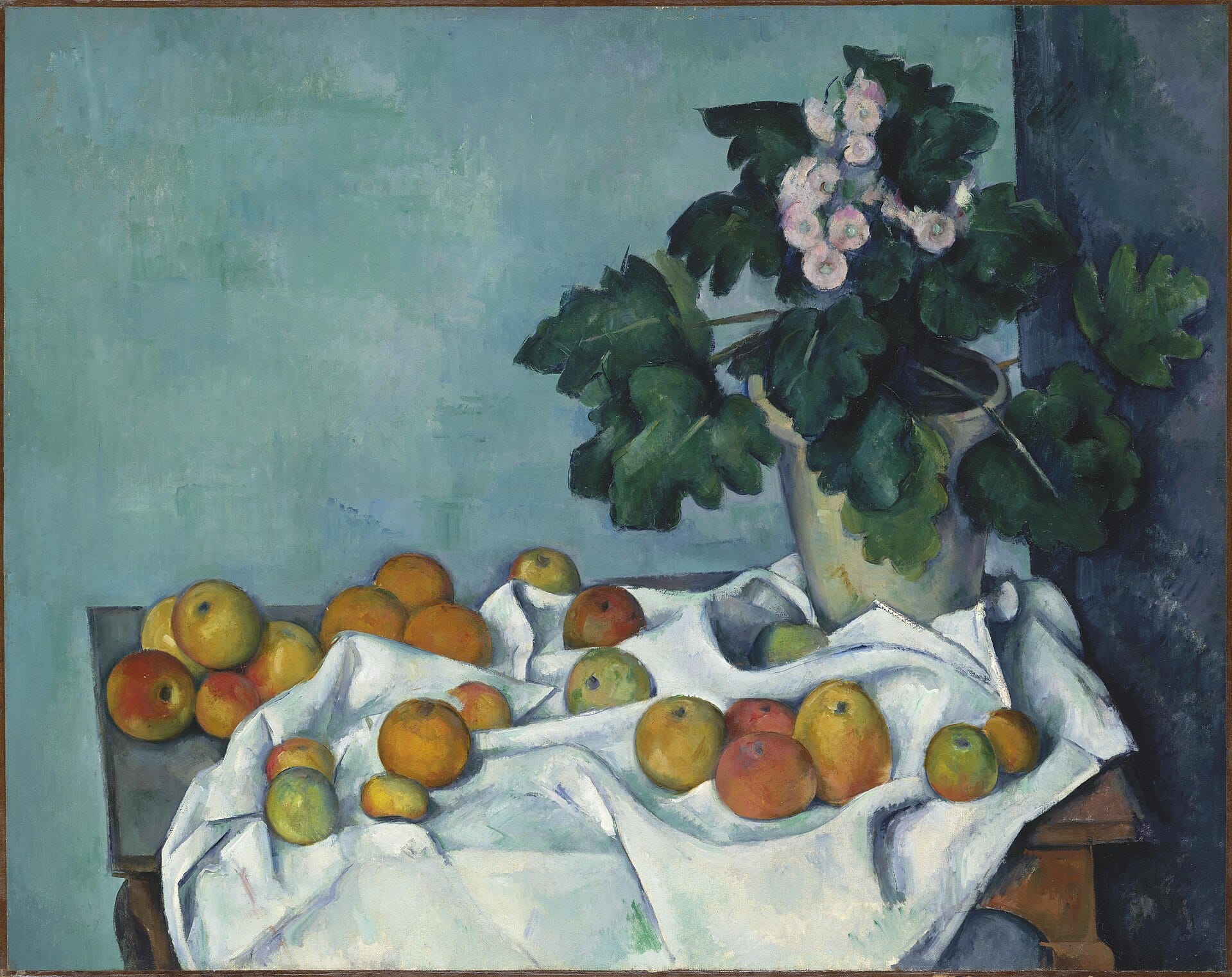
Cézanne was an outsider too, and he spent his life looking. In letters to the young painter Émile Bernard, he described the painter's task as giving concrete form to his own sensations and perceptions through line and color.¹⁵ Merleau-Ponty argued that Cézanne painted a "lived perspective," the world as we actually experience it.¹² The ellipses of his cups swell at the ends. Tables tip toward the viewer. If what he saw broke the rules of perspective, the rules had a problem.
For anyone who develops people, this may be the most useful chapter. The person across the table has a file, an assessment profile, a reputation, and our first impression from three years ago. Before we can develop what is in front of us, we have to see what is actually there.
What we can take from it
The things we know for sure about our people deserve a second look. The outsiders on Wall Street read the bonds themselves. Cézanne looked at the apples himself. We can look at our people the same way.
Two Men, One Table
Cézanne worked on the card players for years, in drawings, studies, and five paintings. The early versions are crowded: several players, an onlooker, a pipe rack, a curtain. The later ones strip the scene down to two men facing each other across a table, with a bottle between them.¹⁶ Less happening. More to see.


In a letter to Bernard from April 1904, Cézanne gave his famous advice: treat nature by means of the cylinder, the sphere, and the cone.¹⁵ Find the basic shapes, and the rest falls into place.
What we can take from it
Clarity often comes from removing things. In a strategy, a presentation, or a development plan, we can ask what the two players at the table really are, and let the spectators go.
Teach Them to Look
Cézanne had help. In the early 1870s Camille Pissarro took the struggling painter outdoors in Pontoise, worked next to him day after day, and led him from the heavy, dark manner of his early pictures toward close observation. Near the end of his life, Cézanne asked to be listed in an exhibition catalogue as "pupil of Pissarro." We told that story in The Man Who Could Teach Stones to Draw.
The painter who would later teach Picasso how to see first needed someone who helped him see. That may be one of the quieter jobs of a good mentor, coach, or leader: to make looking longer, closer, and more honest.
A Personal Note: The Two Commodes
Cézanne rarely painted the same still life twice. One of the exceptions is Still Life with Commode, from the late 1880s. One version hangs in the Harvard Art Museums in Cambridge, the other belongs to the Pinakotheken in Munich.¹⁷ I live and work between those two cities, so I have spent a good deal of time in front of both.
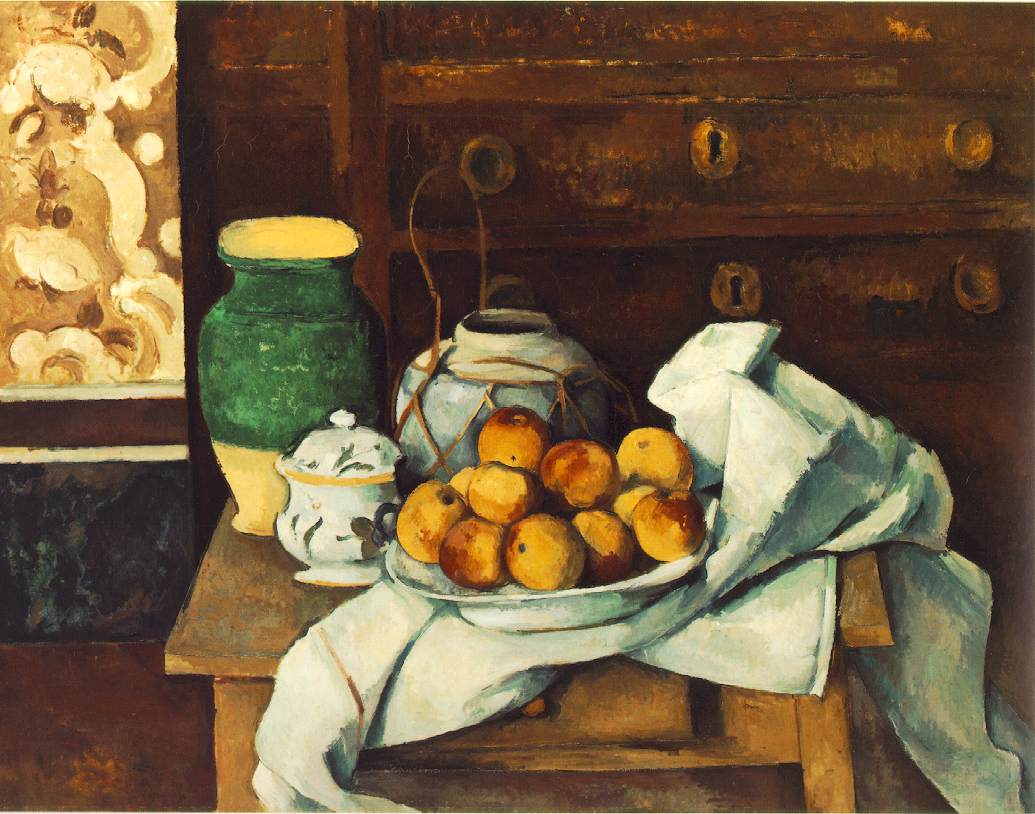
When I stand there with visitors, I ask how the picture feels. The answers are remarkably similar: calm, balanced, warm, almost cozy. Then we look closer. The edges of the table do not line up. The proportions shift from one object to the next. The tablecloth stands up like a small mountain range. The art historian Meyer Schapiro compared it to a rocky mass with "an inner balance of directions."¹⁷
That is the moment I like best. Over the years I have used this painting with leaders to talk about their own lives and careers. The calm contains fractures. Many lives do. A life can feel warm and whole and still be full of breaks when we look closely. Perhaps that is why Cézanne still has so much to say to anyone trying to understand another person's talent.
Look. Doubt. Look again.
Talent Takeaway
Cézanne built a lifetime of work on a few simple habits. Five of them travel well into any team:
Choose your yardstick. Decide what success means for you, and help the people you develop define their own.
Revisit early judgments. A rejected application or a weak review is one data point. Schedule a second look at the people you have already sorted.
Practice the hard thing again. Return to the same difficult skill with a new question each time, instead of moving on too early.
Question your first impression. See the person in front of you today, not the file, and keep asking what you might be missing.
Cut to the essentials. In any plan, meeting, or development goal, find the two things that matter and let the rest go.
¹ Brassaï. (1999). Conversations with Picasso (J. M. Todd, Trans.). University of Chicago Press. (Original work published 1964)
² Martin, R. (2012, February 5). Cezanne sold to Qatar for a record price [Interview with Alexandra Peers]. NPR. https://www.npr.org/2012/02/05/146424989/cezanne-sold-to-qatar-for-a-record-price. The figure is an estimate; the sale was private.
³ Rewald, J. (1986). Cézanne: A biography. Harry N. Abrams.
⁴ National Gallery of Art. The Artist's Father, Reading "L'Événement," 1866 (1970.5.1), collection entry. https://www.nga.gov/artworks/52085-artists-father-reading-levenement
⁵ Rewald, J. (1996). The paintings of Paul Cézanne: A catalogue raisonné. Harry N. Abrams. Salon de 1882, no. 520, "Portrait de M. L. A." The identification with the portrait of the artist's father is widely accepted but not certain; see Feilchenfeldt, W., Warman, J., & Nash, D., online catalogue raisonné, entry FWN 112. https://www.cezannecatalogue.com/catalogue/entry.php?id=112
⁶ Feilchenfeldt, W., Warman, J., & Nash, D. The paintings, watercolors and drawings of Paul Cezanne: An online catalogue raisonné. Société Paul Cezanne. https://www.cezannecatalogue.com
⁷ Matisse, H. (1936). Letter to Raymond Escholier, 10 November 1936. In J. Flam (Ed.), Matisse on art (rev. ed., 1995). University of California Press.
⁸ Princeton University Art Museum. Mont Sainte-Victoire, ca. 1904–06, Henry and Rose Pearlman Foundation. https://artmuseum.princeton.edu/collections/pearlman/highlights/mont-sainte-victoire
⁹ Vollard, A. (1914). Paul Cézanne. Galerie A. Vollard. English edition: Vollard, A. (1923). Paul Cézanne: His life and art. Nicholas L. Brown.
¹⁰ Ericsson, K. A., Krampe, R. T., & Tesch-Römer, C. (1993). The role of deliberate practice in the acquisition of expert performance. Psychological Review, 100(3), 363–406. https://doi.org/10.1037/0033-295X.100.3.363
¹¹ Zervos, C. (1935). Conversation avec Picasso. Cahiers d'Art, 10(7–10), 173–178. English in A. H. Barr Jr. (1946). Picasso: Fifty years of his art. Museum of Modern Art.
¹² Merleau-Ponty, M. (1964). Cézanne's doubt. In Sense and non-sense (H. L. Dreyfus & P. A. Dreyfus, Trans.). Northwestern University Press. (Original work published 1945)
¹³ McKay, A. (Director). (2015). The big short [Film]. Paramount Pictures. Opening voice-over by the character Jared Vennett (Ryan Gosling).
¹⁴ Lewis, M. (2010). The big short: Inside the doomsday machine. W. W. Norton.
¹⁵ Cézanne, P. (1904–1906). Letters to Émile Bernard, including 15 April 1904. In J. Rewald (Ed.), Paul Cézanne: Letters (rev. ed., 1995). Da Capo Press.
¹⁶ Ireson, N., & Dolman, B. (Eds.). (2010). Cézanne's card players. Courtauld Gallery; Paul Holberton.
¹⁷ Harvard Art Museums. Still Life with Commode (1951.46), 1887–88, collection entry, citing Schapiro, M. (1952). Paul Cézanne. Harry N. Abrams. https://harvardartmuseums.org/collections/object/299841. Munich version: Bayerische Staatsgemäldesammlungen, Neue Pinakothek, inv. 8647.
Further reading: John Rewald, Cézanne: A Biography (Abrams, 1986); Maurice Merleau-Ponty, "Cézanne's Doubt" (1945); Meyer Schapiro, Paul Cézanne (Abrams, 1952); Alex Danchev, Cézanne: A Life (Pantheon, 2012); John Elderfield, Cézanne Portraits (Princeton University Press, 2017).
Images: Wikimedia Commons, The Metropolitan Museum of Art (Open Access), and WebMuseum; public domain.