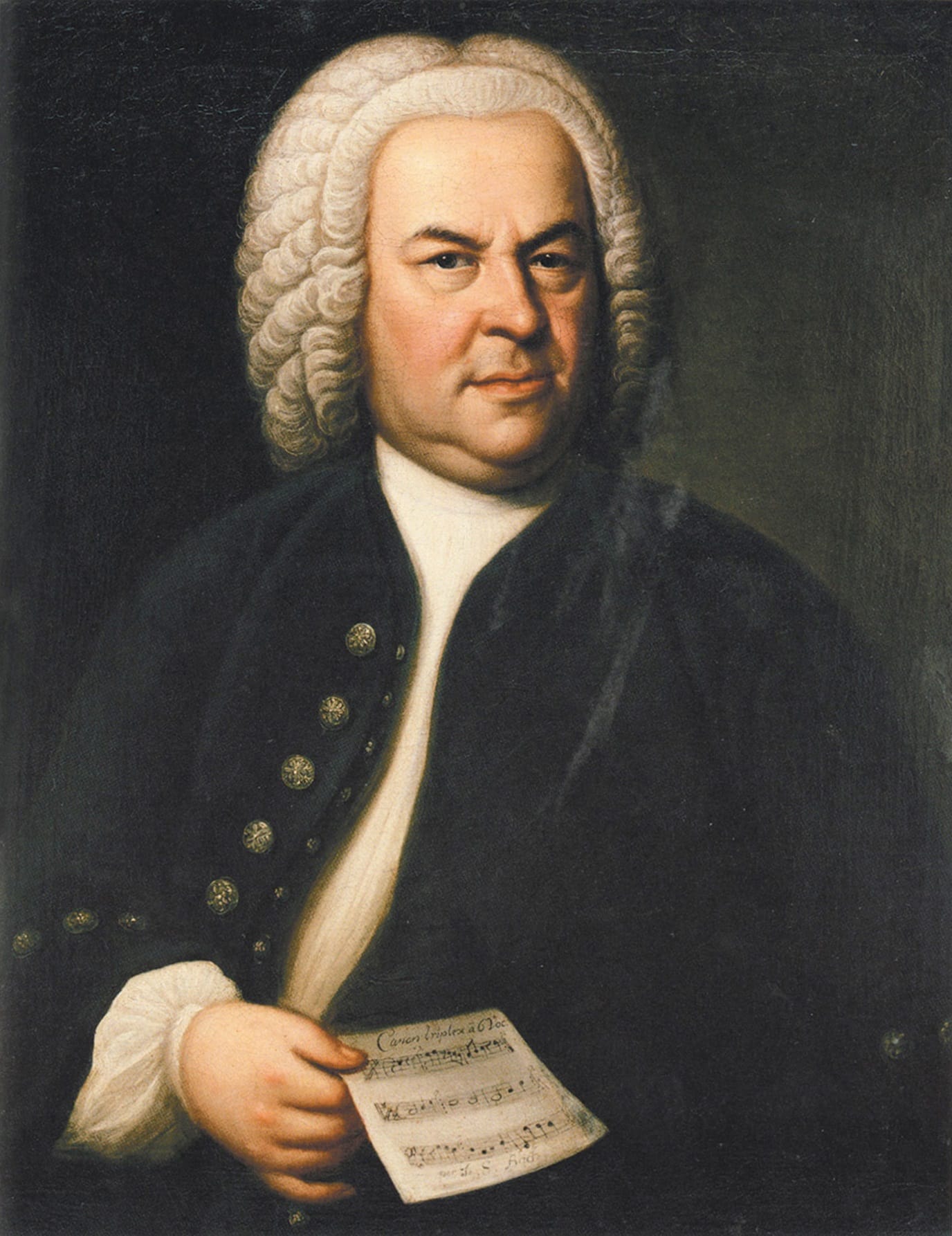
Elias Gottlob Haussmann, Johann Sebastian Bach, 1746, Stadtgeschichtliches Museum Leipzig. The sheet in his hand is a puzzle canon for six voices. Image: Wikimedia Commons (public domain).
Köthen, a small court town in central Germany, January 22, 1720. A father opens a blank notebook and writes on the inside cover that this little keyboard book for Wilhelm Friedemann Bach has been begun today.1 Friedemann is nine years old.
Over the next two years, father and son fill the pages with a curriculum. It opens with the clefs and a table of ornaments, then a short piece with every fingering written out. Little preludes, chorale settings and dances follow. About halfway through, the father writes pieces he calls praeambula, fifteen of them in two voices, and fifteen fantasias in three.
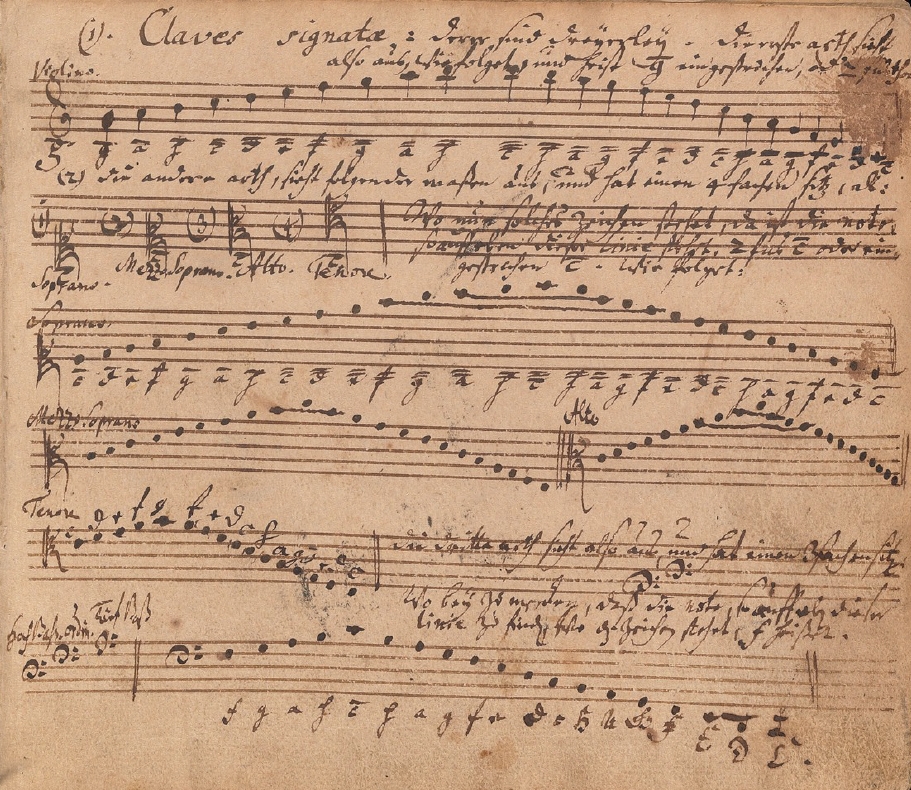
The father is Johann Sebastian Bach. The exercises in his son's notebook became the Inventions and Sinfonias, which piano students around the world still play three centuries later. Several of the little preludes grew into The Well-Tempered Clavier.
One of them sounds like this.
A shorter, earlier version sits in Wilhelm Friedemann's notebook. Practice material for a boy, and, for the rest of us, two very calm minutes of music.
Bach composed more than a thousand works that survive today. He was also, for most of his life, a teacher: of his own children, of the choirboys at the St. Thomas School in Leipzig, and of a steady stream of private pupils who came to learn from him.2 His teaching methods were recorded by his sons, his students and his first biographer. They read like a playbook for anyone who develops people today.
The Boy Who Copied by Moonlight
Bach knew what it meant to want to learn and be kept from it. Before he turned ten, he had lost both parents and moved in with his older brother, Johann Christoph, an organist. The brother owned a book of keyboard music by the leading composers of the day, kept it in a cabinet with a lattice door, and would not let the boy have it.
According to the obituary written by his son Carl Philipp Emanuel and his pupil Johann Friedrich Agricola, the boy reached through the lattice at night, rolled up the book, and copied it by moonlight. It took him six months. When his brother found the copy, he took it away.3
At twenty, now an organist in Arnstadt, Bach asked for four weeks' leave to hear the famous organist Dieterich Buxtehude in Lübeck, roughly 250 miles to the north. The obituary says he made the journey on foot and stayed for nearly a quarter of a year. Back home, his employers asked him to explain himself. He said he had gone to understand one thing and another about his art.4
What he brought home can be heard in the organ works of the following years. Many listeners and scholars hear the North German tradition of Buxtehude, for example, in this one.5
Four weeks of leave, more than three months away. A few years later, the detour sounded roughly like this. Turn it up.
What we can take from it
Eager people often need one thing above all: access. To the good material, to the people who do the work well, to the room where it happens. Opening that cabinet is a gift we can give them.
Homework You Want to Play
Bach started his keyboard pupils on finger exercises. He kept them at it for months. His first biographer, Johann Nikolaus Forkel, who learned about Bach's teaching from two of his sons, adds a detail that matters: when Bach noticed that a pupil was losing patience, he wrote short, connected pieces in which the exercises were combined. The fifteen two-part Inventions, Forkel says, are of this kind.6
In Forkel's telling, then, these pieces were in part a teacher's answer to a student's flagging motivation, and a better answer than more drills. Three centuries later, they still do their job.
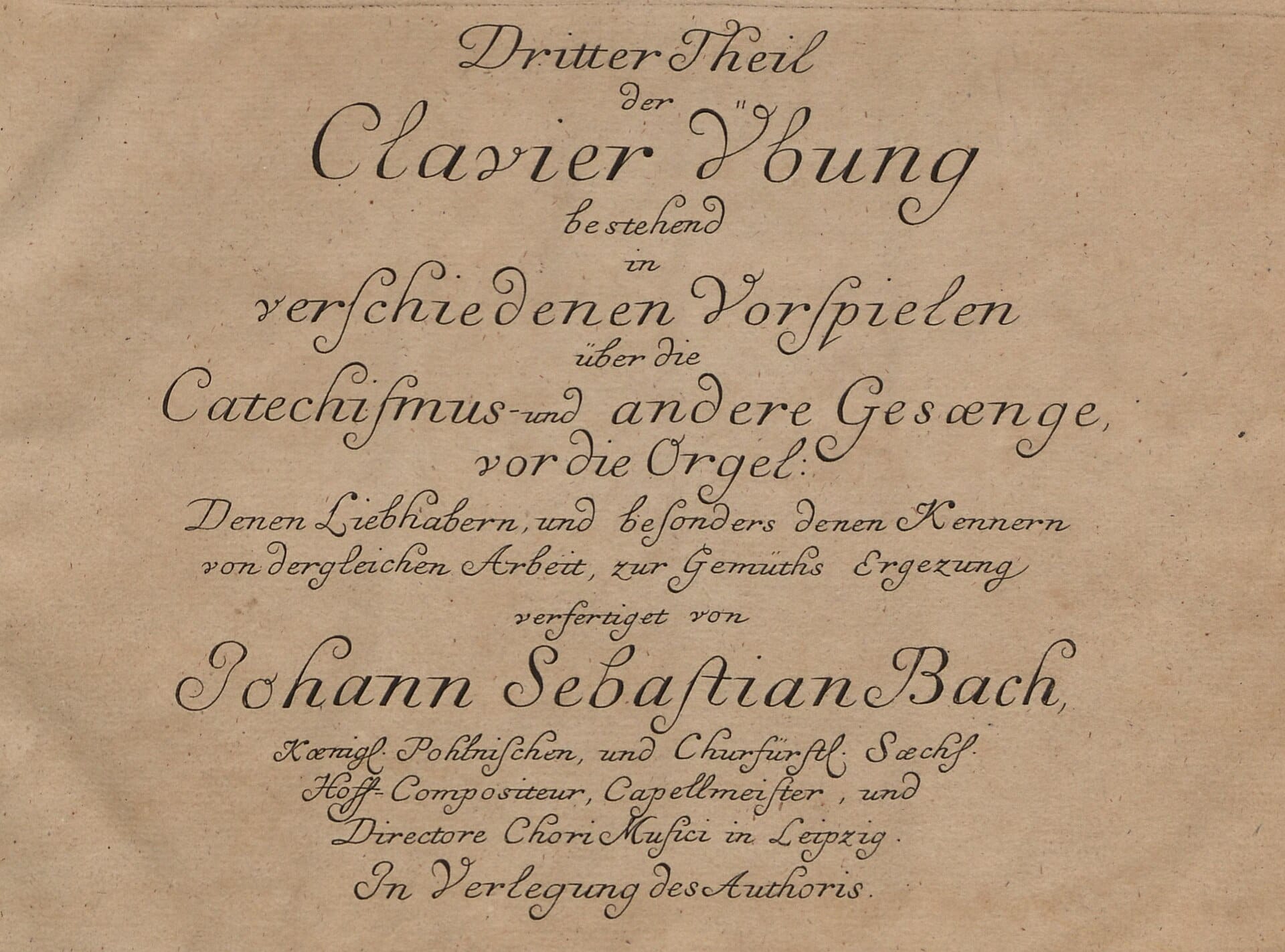
In 1723 Bach made a clean copy of the collection and gave it a title page that reads like a modern learning objective.7 On that page he wrote that the pieces offer honest instruction to lovers of the keyboard, especially those eager to learn, showing them a clear way to play cleanly in two voices, then to handle three; to come up with good ideas and to develop them well; above all to arrive at a singing style of playing; and along the way to gain a strong foretaste of composition. That is a whole curriculum on one title page, written as a single sentence, and the same short pieces serve all of it.
What we can take from it
Good exercises are already real work in small format. When we design a task for someone we develop, it helps to ask: does this give them a foretaste of the job they are growing into?
Ideas From Day One
Carl Philipp Emanuel Bach described his father's way of teaching composition in a letter to Forkel in 1775. His father, he wrote, started his pupils right away with what was practical and skipped the dry counterpoint exercises found in the textbooks. Students began with four-part thoroughbass, working out the harmony over a given bass line. Then came chorales: Bach supplied the bass, and the pupils invented the alto and tenor parts themselves.
He also expected ideas from the start. Anyone who had none, his son reports, was advised to stay away from composition altogether. And Bach chose carefully: he began composition lessons, with his own children as with anyone else, only after he had seen work of theirs that showed talent.8
A demanding entry, then real work from the first lesson. The students Bach accepted were treated as composers in the making.
Play It for Them
Heinrich Nicolaus Gerber came to Leipzig as a student and took lessons with Bach. His son Ernst Ludwig later wrote down what his father remembered. Bach worked through the Inventions with him, then suites, and finally The Well-Tempered Clavier. That last work, the son reports, Bach played through for his father three times in full, and the father counted those hours among his happiest.9
Those performances gave Gerber a model he could hear again and again: what excellence sounds like.
Bach also let his pupils play while he stayed close by. Johann Christian Kittel, among the last to study with him, recalled that one of the most capable always had to accompany at the harpsichord, ready for the teacher’s own hands to join in at any moment.10
What we can take from it
Showing often beats telling, and practice makes it stick. Let people watch you lead the difficult meeting, write the hard email and handle the angry client. Show it more than once, then let them try it themselves.
The Only Crayfish in the Brook
Among Bach's private pupils in Leipzig, Johann Ludwig Krebs stood out. He studied with Bach for about nine years, copied performance parts for his cantatas, and became an organist of real distinction. When Krebs applied for positions, Bach wrote him a warm testimonial that praised him as a keyboard player, violinist, lutenist and composer.11
Bach is also credited with a pun that has followed Krebs ever since. In German, Krebs means crayfish and Bach means brook. Krebs, the story goes, was the only crayfish in Bach's brook.
Specific praise, put in writing where it counts, and a joke that shows affection: both are part of developing people.
A Chain of Teachers
Bach's teaching traveled on through his students.
Carl Philipp Emanuel Bach, the second surviving son, wrote one of the standard keyboard manuals of the eighteenth century, the Essay on the True Art of Playing Keyboard Instruments, drawing on what he had learned from his father.12 Johann Christian Bach, the youngest son, settled in London. In 1764 he befriended a young visitor from Salzburg named Wolfgang Amadeus Mozart, made music with him, and became an important early influence on the boy's style.13
More than four decades after that notebook in Köthen for a nine-year-old, a Bach son was sitting at the keyboard with eight-year-old Mozart.
What we can take from it
When we develop people well, they develop others. Our real reach includes the people our people go on to teach.
What Research Suggests
Three lines of research offer a useful lens on Bach's approach.
The first comes from K. Anders Ericsson and his colleagues, who argued that talent is only part of the story: excellence grows largely from deliberate practice, which “includes activities that have been specially designed to improve the current level of performance.”14 Bach’s notebook for Friedemann reads like a blueprint for exactly that, more than two and a half centuries before Ericsson gave the idea its scientific definition.
The second is Albert Bandura's work on observational learning: people acquire complex behavior to a large extent by watching competent models.15 Bach's three private performances of The Well-Tempered Clavier for Gerber fit that picture well.
The third is research on motor learning that compares watching with doing. Observation alone teaches less than practice, yet learners who combine the two often make the most progress.16 Gerber’s account records the listening, Kittel’s the playing, and we may well assume that Bach’s pupils had both.
One thing Bach added is harder to measure. He made practice beautiful. His exercises are music people still choose to play for pleasure. That may be a demanding part of his method to copy, and a rewarding one to try.
What Bach Did
He built the curriculum himself. Step by step, in a notebook tailored to one pupil.
He watched motivation. When patience ran out, he wrote better material.
He made practice real. Every exercise gave a foretaste of the finished craft.
He asked for ideas early. The pupils he accepted for composition were treated as creators from the first lesson.
He showed what excellence sounds like. He showed it more than once, then put his students to work.
Anyone Who Works as Hard
Asked about the secret of his skill, Bach is reported to have answered with a sentence Forkel recorded: he had been obliged to be industrious, and whoever was equally industrious would succeed just as well.17
We may smile at that. Few of us will write the St. Matthew Passion, however hard we work. Yet the sentence tells us something about Bach as a teacher. He trusted what steady, well-designed work can do for a learner. He filled that notebook for a nine-year-old so that the boy might one day be a master.
Perhaps that is the homework Bach leaves us: to recognize the potential in the people we develop and see what they could become.
Talent Takeaway
Bach developed people with material he designed himself, practice that felt like the real thing, and a firm belief in what steady work can do. For our own teams, three things we can use immediately:
Design the next step. Give each person one task that is real work in small format.
Keep the spark alive. When energy drops, change the material before raising the pressure.
Show it, then step back. Let people see excellent work done more than once. After that, hand them the stage.
1 Clavier-Büchlein vor Wilhelm Friedemann Bach, begun January 22, 1720, with entries to about 1722. Yale University Library.
On its contents:
Klavierbüchlein für Wilhelm Friedemann Bach. (n.d.). In Wikipedia.
https://en.wikipedia.org/wiki/Klavierb%C3%BCchlein_f%C3%BCr_Wilhelm_Friedemann_Bach
Full scan of the manuscript:
https://imslp.org/wiki/Notebook_for_Wilhelm_Friedemann_Bach_(Bach,_Johann_Sebastian)
2 Researchers have traced more than a hundred of Bach's private pupils by name. Bernd Koska's list sorts them into confirmed, probable and supposed pupils.
Koska, B. (2019). Bachs Privatschüler. Bach-Jahrbuch, 105.
In addition, according to the Bach Archive Leipzig, no fewer than 300 boys passed through Bach's lessons at the St. Thomas School during his 27 years in Leipzig.
Bach-Archiv Leipzig. (n.d.). Johann Sebastian Bachs Thomaner.
https://www.bacharchivleipzig.de/de/bach-archiv/johann-sebastian-bachs-thomaner
3 Bach, C. P. E., & Agricola, J. F. (1754). Obituary of Johann Sebastian Bach. Musikalische Bibliothek, 4(1).
English translation in David, H. T., Mendel, A., & Wolff, C. (Eds.). (1998). The new Bach reader: A life of Johann Sebastian Bach in letters and documents (Rev. ed.). W. W. Norton.
4 Minutes of the Arnstadt Consistory, February 21, 1706. In David, Mendel, & Wolff (1998), see note 3.
On the journey on foot and the length of the stay: Bach & Agricola (1754), see note 3.
5 BWV 532 shows hallmarks of the North German style Bach had heard in Lübeck. Prominent examples are the virtuosic pedal solos and the free sections in the stylus phantasticus alternating with strict ones.
Bachs freie Orgelwerke. (n.d.). Präludium und Fuge D-Dur / BWV 532.
https://bachs-orgelwerke.de/index.php/werkverzeichnis/2-bwv532
6 Forkel, J. N. (1920). Johann Sebastian Bach: His life, art, and work (C. S. Terry, Trans.). Harcourt, Brace and Howe. (Original work published 1802), chapter "Bach as a Teacher."
https://www.gutenberg.org/ebooks/35041
7 Bach, J. S. (1723). Auffrichtige Anleitung [Inventions and Sinfonias, BWV 772–801, autograph fair copy]. Staatsbibliothek zu Berlin, Mus. ms. Bach P 610.
8 Bach, C. P. E. (1775, January 13). Letter to Johann Nikolaus Forkel. In David, Mendel, & Wolff (1998).
9 Gerber, E. L. (1790). Historisch-biographisches Lexicon der Tonkünstler. Breitkopf.
Excerpt in David, Mendel, & Wolff (1998).
10 Kittel’s recollection in David, Mendel, & Wolff (1998), p. 323.
11 Bach, J. S. (1735). Testimonial for Johann Ludwig Krebs. In David, Mendel, & Wolff (1998).
The crayfish pun is a later attribution; we know of no contemporary source for it.
12 Bach, C. P. E. (1753–1762). Versuch über die wahre Art das Clavier zu spielen (2 vols.). Berlin.
English translation:
Mitchell, W. J. (Trans. & Ed.). (1949). Essay on the true art of playing keyboard instruments. W. W. Norton.
Scans of the original edition:
https://imslp.org/wiki/Versuch_%C3%BCber_die_wahre_Art_das_Clavier_zu_spielen_(Bach,_Carl_Philipp_Emanuel)
13 Wolff, C. (2000). Johann Sebastian Bach: The learned musician. W. W. Norton.
On Johann Christian Bach and Mozart:
Terry, C. S. (1929). John Christian Bach. Oxford University Press.
14 Ericsson, K. A., Krampe, R. T., & Tesch-Römer, C. (1993). The role of deliberate practice in the acquisition of expert performance. Psychological Review, 100(3), 363–406, quotation on p. 368.
https://doi.org/10.1037/0033-295X.100.3.363
15 Bandura, A. (1977). Social learning theory. Prentice Hall.
16 Wulf, G., & Mornell, A. (2008). Insights about practice from the perspective of motor learning: A review. Music Performance Research, 2, 1–25.
https://musicperformanceresearch.org/wp-content/uploads/2020/11/Wulf-and-Mornell-Vol.-2-1-25.pdf
Larssen, B. C., Ho, D. K., Kraeutner, S. N., & Hodges, N. J. (2021). Combining observation and physical practice: Benefits of an interleaved schedule for visuomotor adaptation and motor memory consolidation. Frontiers in Human Neuroscience, 15, 614452.
https://doi.org/10.3389/fnhum.2021.614452
17 Forkel, J. N. (1920), see note 6.
More to Explore
Further listening
In its project All of Bach, the Netherlands Bach Society is making high-quality recordings of all 1,080 known works by Bach: historically informed performances, filmed in HD in settings from grand churches to private homes. Everything is free to watch online:
https://www.allofbach.com
https://www.youtube.com/bach
A 29-second introduction that leaves you wanting more:
https://youtu.be/arFoqBf2sho
More listening, from our own century
“Eisenach – JSB” (2026) takes its name from Bach’s birthplace. With it, the pianist, composer and longtime executive Hanns-Ferdinand Müller pays tribute to the master whose preludes and fugues had been part of his piano lessons since childhood.
https://open.spotify.com/track/3j1h5A9EBb76iuJvKMbVJg
In his book Der Ton macht die Führung (Tone Makes Leadership, 2026, in German), Müller also draws striking parallels between music and management. See our review: Leading by Ear
Further reading
Christoph Wolff, Johann Sebastian Bach: The Learned Musician (Norton, 2000)
John Eliot Gardiner, Music in the Castle of Heaven: A Portrait of Johann Sebastian Bach (Knopf, 2013)
Horatio Clare, Something of His Art: Walking to Lübeck with J. S. Bach (Little Toller, 2018)
Hans T. David, Arthur Mendel and Christoph Wolff (Eds.), The New Bach Reader (Norton, 1998)
Images: Wikimedia Commons, public domain. Videos: YouTube (Prelude in C major, BWV 846, Robert Hill; Netherlands Bach Society, All of Bach; Prelude and Fugue in D major, BWV 532, James Kennerley).